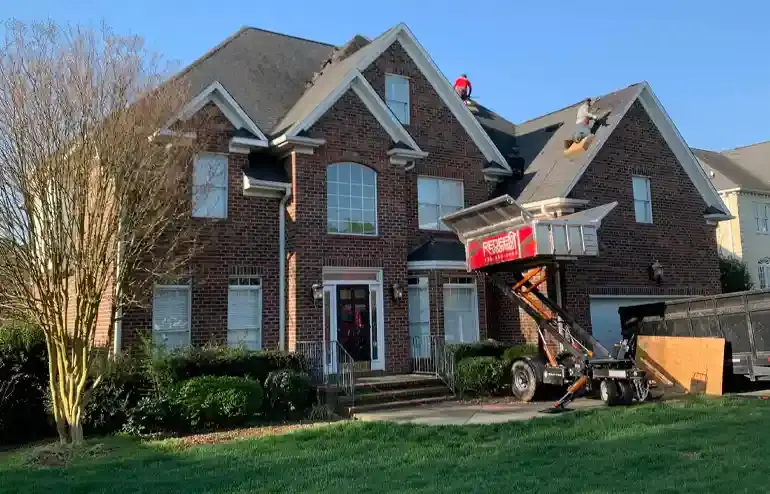
Your roof does two jobs at once. First, it protects your home from everything the Piedmont Triad weather can throw at it — storms, rain, wind, snow and ice. Second, it shapes how your house looks from the street and supports its overall value. Most homeowners never think about their roof until something goes wrong, but understanding a few basics makes it far easier to spot problems early and make smart decisions when it's time to repair or replace.
Here's a quick, no-jargon rundown of what makes up a roof and what's worth knowing about yours.
What a roof is actually made of
A roof is more than the shingles you see. It's a layered system, and each part has a job. The main components include:
- Rafters: The wood or metal framing that supports everything above and gives the roof its shape.
- Sheathing (decking): The sheet material fastened over the rafters that the rest of the roof is built on top of.
- Underlayment: A waterproof layer installed over the sheathing to block any moisture that gets past the shingles.
- Shingles: The outer weather barrier — most commonly asphalt — that takes the brunt of the sun, rain and wind.
- Flashing: Metal that seals the vulnerable spots around vents, chimneys and valleys where water likes to sneak in.
- Trim: Protects the seams along the ridge and edges of the roof.
- Drainage: Gutters and downspouts that carry water away from your foundation.
When any one of these layers fails, the others get exposed — which is why a small, ignored issue can turn into a much bigger one. If you suspect a weak point, a quick roof repair is almost always cheaper than waiting.
Five things to know about your own roof
Beyond the parts list, there are a handful of details worth understanding about the roof over your head.
1. Ventilation
Good attic and roof ventilation lets heat and moisture escape instead of building up underneath. Proper airflow helps prevent mold, reduces summer heat gain, and can meaningfully extend the life of your roof.
2. Its last repair or installation date
Knowing when your roof was last installed or worked on tells you roughly where it is in its lifespan and how closely you should be watching it. If you're not sure, keep a record going forward and schedule periodic roof maintenance.
3. Fire rating
Roofing materials carry a fire-resistance rating of Class A, B or C. Class A offers the highest level of fire resistance and Class C the lowest. It's a useful thing to know when comparing shingle options.
4. Pitch and slope
The angle of your roof — its pitch and slope — helps determine which materials are appropriate. Some shingle types perform well on steeper roofs but aren't suited to low-slope designs, and vice versa.
5. Shingle type and quality
The shingles you choose directly affect how durable your roof is and how long it lasts. Higher-quality materials cost more up front but often pay off in years of added service life. If you're weighing your options, our overviews of asphalt shingle roofing and metal roofing break down the differences.
The more you understand your roof as a system, the easier it is to catch small problems before they become expensive ones.
Not sure where your roof stands?
If any of this raised a question about your own home, the simplest next step is a professional set of eyes. Redeem Roofing & Construction offers free, no-pressure inspections and estimates across Burlington, Greensboro, Winston-Salem and the wider Piedmont Triad. We'll walk your roof, explain what we find in plain language, and lay out your options. Request your free estimate or call us at (336) 350-1450 — whether it's a small repair or a full roof replacement, we're happy to help.