The Most Common Roof Problems
Every property owner should understand the issues that affect a roofing system most often. Waiting until water damage shows up inside your home is the wrong way to find out something is wrong. Skipping routine maintenance or putting off a small repair almost always leads to a bigger, costlier problem down the road — and shortens the life of your roof in the process.
Rather than risk expensive structural damage, the smartest move is to schedule a yearly inspection and an extra look after any major storm. Catching trouble early keeps small fixes small. Below are the four areas that cause the most headaches for homeowners across Burlington, Greensboro and the Piedmont Triad.
1. Flashing
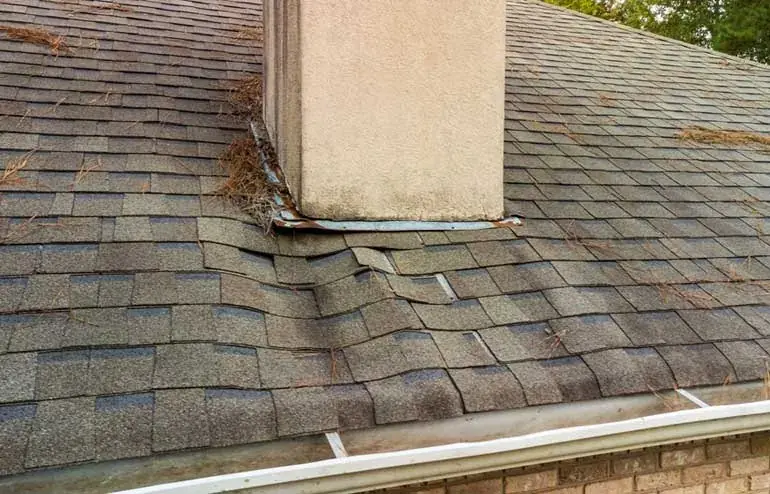
Flashing is the metal that seals the gaps where your roof meets something else — in corners and valleys, and around protrusions like vents and chimneys. Its whole job is to keep moisture and leaks out of those vulnerable transitions.
Over time, flashing deteriorates. It can work loose, pull away or corrode, and once that happens water has a direct path into the structure. Because flashing sits at the exact points where leaks tend to start, it's one of the first things a professional checks during an inspection.
2. Shingles
Asphalt shingles wear out by curling at the edges and cracking across the surface. The protective granules that coat each shingle gradually wash away and collect in your gutters — finding granule buildup down there is often the first sign your shingles are aging out.
You can do a quick check from the ground with a pair of binoculars, scanning for curled, cracked or missing shingles and any bare, discolored patches. If anything looks off, it's worth having it assessed before the next storm. When shingles are too far gone, a targeted roof repair or a full roof replacement may be the right call.
3. Gutters
Gutters don't get much attention until they fail, but they protect far more than the roofline. When gutters clog, water can't flow where it should — it backs up, spills over, and the weight pulls the gutters away from the house, damaging siding in the process.
Trapped debris also attracts pests and can contribute to leaks. Downspouts that empty too close to the house let water pool against the foundation, which raises the risk of basement and crawlspace seepage. The fix is simple maintenance:
- Clear out leaves and debris at least twice a year.
- Seal small cracks before they spread.
- Make sure downspouts carry water well away from the foundation.
4. Soffit and Fascia
The fascia is the trim board that runs horizontally along the edge of your roof. It does double duty — it gives the roofline a finished look and helps protect the structure behind it from moisture.
The soffit sits underneath the eave overhang, and it plays a quiet but critical role in attic ventilation: it lets heat and moisture escape so they don't build up under your roof. When soffit and fascia rot or get blocked, that ventilation suffers, which can shorten the life of the roof above it.
The common thread across all four: small problems are cheap to fix and disasters are not. A quick inspection catches them while they're still small.
Catch It Early — Before the Leak
You don't have to diagnose any of this on your own. Redeem Roofing & Construction has served Triad homeowners since 2016, and our free inspections cover every one of these problem areas — flashing, shingles, gutters, soffit and fascia. If we find something, we'll show you photos and walk you through your options with no pressure. Schedule your free roof inspection today, and let's keep a small problem from turning into a big one.