The shape of your roof does far more than set your home's silhouette. It directly affects how water drains, how well the structure stands up to wind, how much usable attic space you get, and even your home's curb appeal and value. When you're planning a new roof or a replacement, understanding the basic roof types helps you make a confident, informed decision.
Most homes in our area come down to three common roof shapes: flat, gable, and hip. Below we break down the defining features, pros, and cons of each.
Flat Roofs
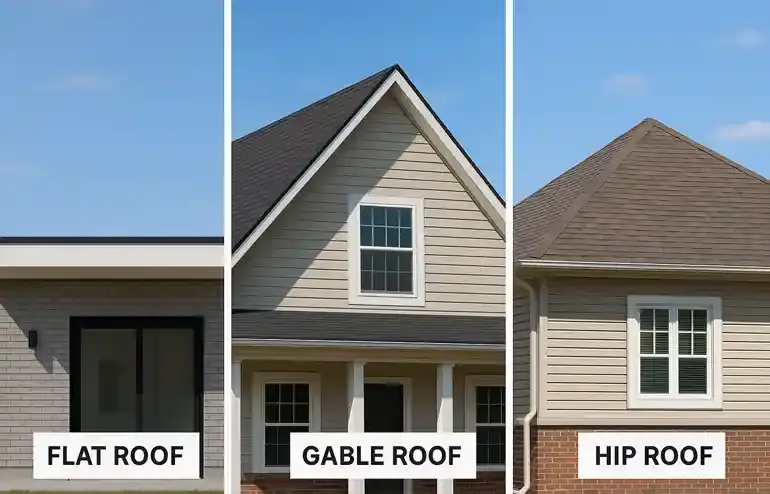
A flat roof isn't perfectly level — it carries a slight slope (typically between 1/4 and 1/2 inch per foot) so water can drain. You'll most often see flat roofs on commercial buildings, home additions, and modern-style homes. They're usually finished with single-ply membranes and similar low-slope materials such as TPO, EPDM rubber, or modified bitumen.
Pros
- Cost-effective: fewer materials and simpler installation generally mean lower upfront cost.
- Easy access: the walkable surface makes inspections and maintenance more straightforward.
- Usable space: the flat surface can host rooftop patios, HVAC units, or solar panels.
Cons
- Drainage matters: because the slope is minimal, poor installation can lead to standing water and leaks.
- Shorter lifespan: flat roofs often don't last as long as steeper, pitched options.
Gable Roofs
The gable roof is the classic triangle you probably drew as a kid — two sloping sides that meet at a central ridge. Its steep pitch sheds water and snow efficiently, and its straightforward design keeps construction simple and affordable. Gable roofs are a staple on Colonial, Cape Cod, and traditional suburban homes.
Pros
- Sheds water well: the sloped design helps water and snow run off, reducing the chance of leaks.
- Extra room: the shape creates generous attic space or room for vaulted ceilings.
- Budget-friendly: simpler to build than more complex roof shapes.
Cons
- Wind exposure: the large, flat gable ends can be more vulnerable to wind damage, especially in storm-prone areas.
- Steeper to service: the higher pitch can make maintenance more difficult and less safe to perform.
Hip Roofs
A hip roof slopes inward on all four sides, meeting at a ridge or a single point with no flat vertical ends. This design is well suited to ranch-style, Mediterranean, and French-inspired homes, and it can be combined with gables or dormers for added character.
Pros
- Wind resistance: sloping on all four sides makes hip roofs more resistant to wind and severe weather.
- Structural strength: the even weight distribution adds to the roof's overall stability.
- Consistent comfort: with proper ventilation, a hip roof helps keep interior temperatures steady.
Cons
- Higher cost: the added complexity requires more materials and labor.
- Less attic space: the inward-sloping sides reduce usable room beneath the roof.
How to Choose the Right Roof Type
There's no single "best" roof — the right choice depends on your home and your priorities. As you weigh your options, consider:
- Local climate: how much wind, rain, and storm activity your home typically sees.
- Budget: both upfront installation cost and long-term value.
- Architectural style: a roof shape that complements your home's design.
- Maintenance goals: how much upkeep you want to take on over the years.
The right roof shape, paired with the right materials, protects your home for decades — the wrong combination invites leaks and repairs. It's worth getting it right the first time.
Whatever shape your home calls for, the materials on top of it matter just as much. We install durable asphalt shingle and long-lasting standing-seam metal roofing systems, and we handle everything from roof repair to full roof replacement across the Triad.
Not sure which roof type fits your home, your budget, and our local weather? The team at Redeem Roofing & Construction is happy to walk your property, talk through your options, and give you honest guidance. Schedule your free, no-obligation estimate and we'll help you choose with confidence.