Replacing a roof is one of the bigger decisions you'll make for your home, and not knowing how the work unfolds can make it feel bigger still. Understanding the full process — from the first steps to the final inspection — removes that uncertainty and helps you feel confident in the work being done overhead. Below is what you can expect from start to finish when you replace your roof in Burlington, Greensboro, Winston-Salem and across the Piedmont Triad.
1. Preparation and Protection
Before a single shingle comes off, a good roofing crew protects your home and landscape. Solid prep keeps the job site organized, safe, and easy to clean up later. Typical preparation includes:
- Covering plants, decks, and walkways with tarps
- Setting up safety equipment for the crew
- Positioning the dumpster and vehicles away from your home
- Staging tools, materials, and access points
2. Tear-Off of the Old Roof
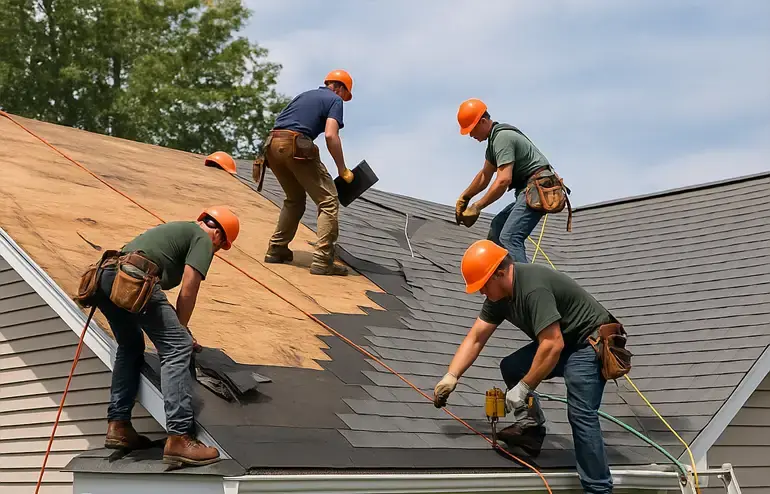
Some roofers install new shingles directly over the old ones. Others perform a full tear-off so the new roof can be installed on a sound foundation. For the best long-term result, a full tear-off is the smarter route — it lets the crew see and evaluate the roof deck and address hidden problems before they're covered up again.
During tear-off, the crew typically removes:
- Old shingles
- Underlayment
- Old nails
- Flashing
- Damaged vents or accessories
Once the decking is exposed, it's far easier to spot anything that could compromise your new roof.
3. Inspection and Repair of the Decking
With the wood decking visible, the crew inspects it for:
- Rot
- Soft spots
- Water damage
- Warping
- Mold or mildew
Any compromised sections of decking should be replaced before installation continues, so your new roof has a stable, long-lasting base to sit on. If your roof is showing leaks or sagging now, our roof repair team can assess whether a repair or a full replacement is the right call.
4. Underlayment and Flashing
Next comes waterproofing — one of the most important and most overlooked parts of a durable roof system. A new roof typically includes:
- Synthetic underlayment — a water-resistant layer that shields the decking from moisture.
- Ice and water shield — installed around roof penetrations, valleys, and edges to help prevent leaks in the most vulnerable areas.
- Updated flashing — metal flashing around chimneys, skylights, vents, and walls that redirects water runoff away from seams.
5. Shingles and Ventilation
With the foundation secured, the crew installs the visible portion of the roof:
- Starter shingles along the edges
- High-quality architectural shingles
- Ridge caps along the peaks
- Ventilation components such as ridge vents and attic vents
Proper ventilation is vital and easy to underestimate. It reduces heat buildup, improves energy efficiency, extends shingle life, and helps prevent attic moisture problems down the road. We install architectural asphalt shingle systems and standing-seam metal roofing depending on what fits your home and budget best.
6. Clean-Up
A professional roofer leaves your property as clean as they found it — or cleaner. A reputable crew will:
- Sweep and magnet-roll the property for stray nails
- Remove debris and unused materials
- Clean out the gutters
- Make sure walkways and driveways are clear
"Absolutely spectacular service. Our roof looks amazing and there was not a single nail left anywhere — best decision for our home." — Google review
7. The Final Inspection
The last step is a thorough walkthrough of the finished roof. A proper final inspection includes:
- Checking the flashing installation
- Verifying shingle alignment and fastening
- Confirming the ventilation is properly installed
- Reviewing the roof for consistency and overall workmanship
- Confirming all materials match what's in your contract
Your roofer should walk you through the completed work, answer your questions, and make sure you're satisfied before the job is considered done.
How Long Does a Roof Replacement Take?
Most residential roof replacements are completed in a day or two, though the timeline depends on the size and complexity of your roof and on the weather. Storm-damage and insurance work can add steps, and our team can manage the insurance claim process alongside the install so you're not navigating it alone.
Common Questions
Will the roofer replace damaged decking?
Yes. If rot, soft spots, or water damage are found after tear-off, the compromised decking should be replaced before any new materials go down. Skipping this step undermines the roof you just paid for.
Why is ventilation included in a roof replacement?
Ventilation helps reduce heat and moisture buildup in the attic, which supports energy efficiency and helps extend the life of your shingles. It's a core part of the system, not an upsell.
Built to Last, Done with Care
In the end, a roof replacement doesn't just improve curb appeal — it protects your home for decades. A seamless, lasting result comes down to one thing: installation done professionally, with care and quality at every step.
Redeem Roofing & Construction is a family-owned contractor serving Burlington, Greensboro, Winston-Salem and the Piedmont Triad since 2016, rated 4.9★ across 185+ Google reviews. If your roof is due for replacement, request your free estimate and inspection today — no cost, no pressure, just an honest assessment of what your home needs.