
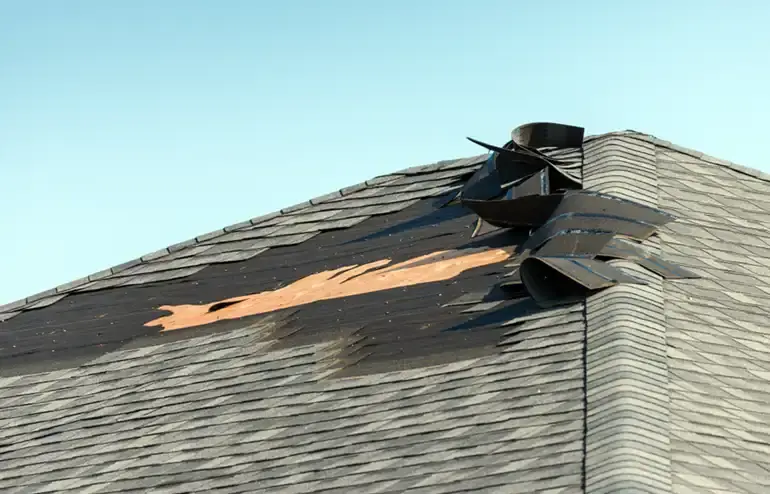
Your roof is the first line of defense between your family and the weather, so a well-maintained roof is one of the most important ways to protect your home from the elements. After a severe windstorm or hailstorm tears through Burlington, Greensboro, Winston-Salem, or anywhere else in the Triad, it's worth taking the time to respond the right way. Acting promptly — but safely — limits further damage and makes the repair and insurance process far smoother.
Here are the steps every homeowner should take after a storm damages their roof.
1. Safety First
Before you inspect anything, make sure conditions are secure. Stay indoors until the storm has fully passed. Once it's safe to go outside, watch for hazards like downed power lines, fallen trees, and scattered debris. Never assume a power line is dead, and keep your distance from anything that looks unstable.
You can get a good first look at your roof from the ground using a pair of binoculars — there's no need to climb up onto a wet, storm-damaged roof. Leave the up-close inspection to a professional with the right equipment and training.
2. Inspect From the Ground
Walk the perimeter of your home and look up at the roof for obvious signs of trouble. From a safe distance, keep an eye out for:
- Missing or lifted shingles — bare or patchy spots where wind has peeled material away.
- Damaged flashing around chimneys, vents, and skylights, which is a common entry point for water.
- Debris on or against the roof, such as large branches and twigs that may have caused impact damage.
Also glance at your yard and gutters — shingle granules, broken pieces of shingle, or chunks of flashing on the ground are clear signs your roof took a hit.
3. Check for Leaks
Storm damage isn't always visible from outside, so check your home's interior too. In the attic, look for water stains, mold, or damp insulation. In living spaces, watch for brown stains on ceilings and walls, bubbling or peeling paint, and any musty smell. Catching a leak early can prevent a small problem from turning into rotted decking, ruined insulation, or mold.
4. Document the Damage
Once you've identified problem areas, document everything. Take clear photos — both close-ups and wider shots that show context — of any damage to your roof, gutters, siding, windows, and interior. Good documentation is invaluable when it's time to file an insurance claim and when you sit down with a contractor to talk about repairs.
Keep a simple record of when the storm hit, what you found, and the photos you took. Organized notes make the claims process much faster.
5. Contact a Professional Roofer
Even if the damage looks minor, have it evaluated by a professional. A qualified roofer can safely get on the roof, identify damage you can't see from the ground, and perform emergency work — like temporary tarping — to keep water out until permanent repairs are made. When you're comparing options, it's smart to gather more than one quote so you know you're getting fair pricing and honest recommendations.
At Redeem Roofing & Construction, we offer free inspections and estimates, and we've helped homeowners across the Triad recover from storm damage since 2016. Whether you need a quick roof repair or a full roof replacement, we'll walk the roof, show you what we find, and explain your options with no pressure.
6. Make a Plan for Roof Maintenance
The best time to protect your roof is before the next storm. A little routine upkeep goes a long way toward catching small issues before they become expensive repairs:
- Schedule a yearly roof inspection so a professional can spot wear and tear early.
- Trim overhanging branches that could break off and damage the roof in high winds.
- Clean your gutters twice a year, in spring and fall, to keep water flowing away from your home.
Ongoing care also extends the life of your roof. Learn more about our roof maintenance services to keep your home protected year-round.
7. File an Insurance Claim
If the storm caused significant damage, contact your insurance company as soon as possible. Before you call, review your policy so you understand your coverage and deductible. Report the claim promptly and provide the photos and notes you gathered earlier.
An experienced roofer can be a real asset here — a good contractor will meet with the insurance adjuster, point out all the storm-related damage, and advocate on your behalf so nothing gets overlooked. Our team handles insurance claims regularly and is happy to guide you through the process from inspection to final repair.
Don't Wait — Storm Damage Gets Worse
The longer storm damage goes unaddressed, the more it can cost you. A missing shingle today can become a leaking ceiling and rotted decking after the next rain. If a recent storm hit your home in Burlington, Greensboro, Winston-Salem, or anywhere in the Triad, request a free estimate or call us at (336) 350-1450 — we'll get out, inspect your roof, and help you make the right call with no obligation.